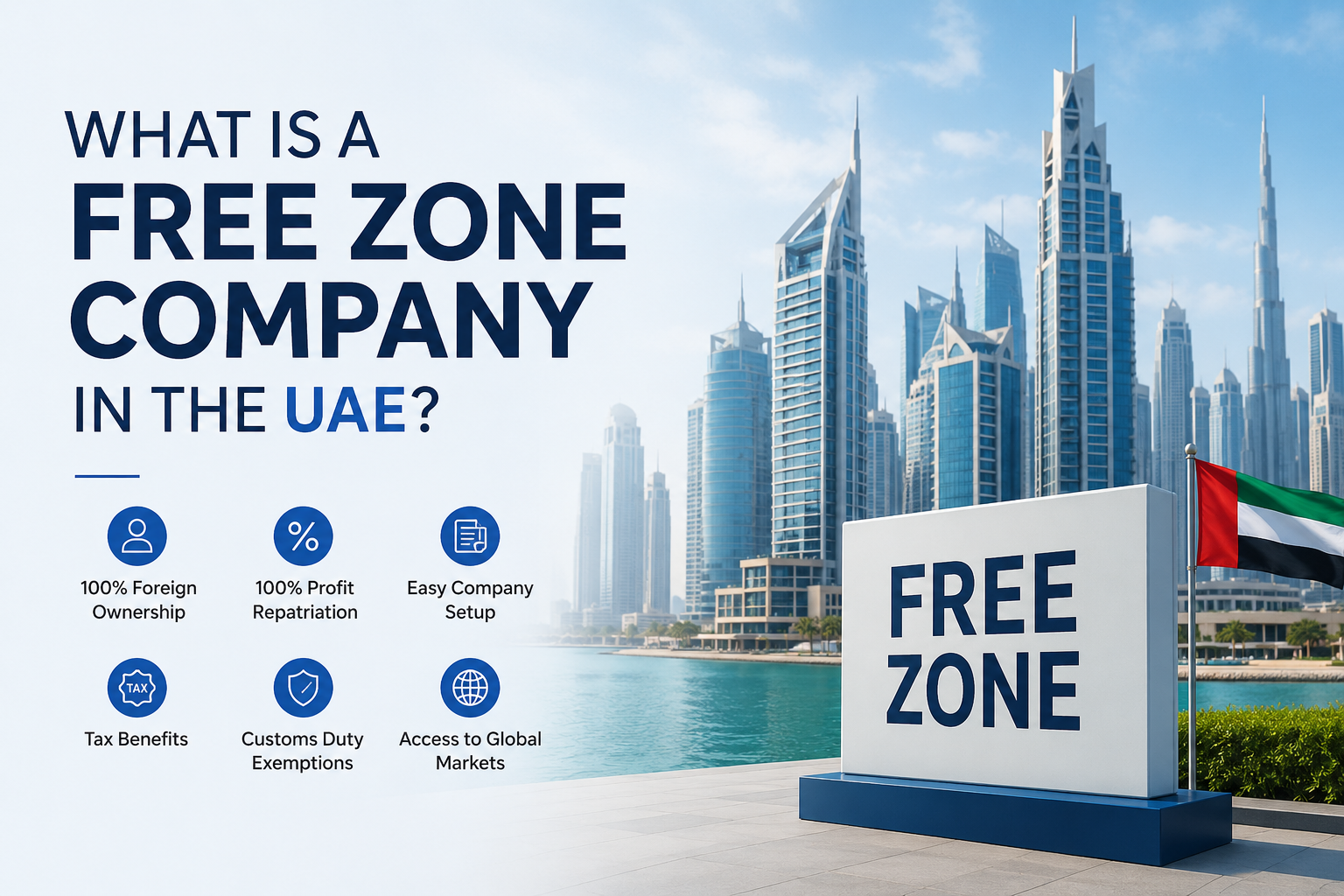
Free zones have played a significant role in making the UAE a global commercial hub, an innovative business environment, and a centre for international trade. A free zone company is an entity incorporated in a free zone jurisdiction. The free zone business regulations offer 100% foreign ownership, tax efficiency, cost-effective company formation, a streamlined setup process, and highly productive business operations.
This comprehensive guide breaks down key aspects of UAE free zone companies, including the basic concept, pros and cons, business setup process, and expenses. Whether you own a multinational company, are planning a new venture, or are thinking of a start-up, this post will provide insights to help you make decisions.
What Does UAE Free Zone Mean?
A UAE free zone is a distinct business jurisdiction that operates independently under its own free zone authority. Designed to boost Foreign Direct Investment (FDI), the free zone will offer exclusive benefits and smooth operation. Each free zone will focus on specific business sectors and industries, with policies formulated to promote their growth.
The Free Zone Authority will issue initial approval, approve the trade name, issue trade licenses, and regulate the businesses. The free zone concept has made the UAE an investor-friendly destination. The country has a constantly growing investor footprint since the launch of the first free zone. Today, there are more than 45 free zones across the UAE.
Advantages of a Free Zone Company Setup
The key reasons for the increased foreign investment in the UAE free zones are connected directly to the benefits they offer. Besides a streamlined business setup process, the ownership, repatriation, operational, and tax advantages have made free zones a success with global entrepreneurs.
100% Foreign Ownership: A foreign investor can have 100% ownership of the free zone company. S/he can manage and control the company and take home 100% of the profit. All corporate decisions, shares, expansion plans, and orders are prepared and executed under the sole command of the investor.
Repatriation of Capital and Profit: No restrictions whatsoever exist concerning the repatriation of capital and profits. The investor is permitted to repatriate the sum without any currency or regulatory restrictions.
Streamlined and Easy Business Setup: The relevant Free Zone Authority (FZA) is the administrative body for every UAE free zone. Trade license issuance and company incorporation procedures are regulated and approved by the FZA. Only regulated business sectors require additional approvals from the respective government departments. A fully streamlined and systematic process makes company formation in free zones easy and quick.
Advanced Infrastructure: Each UAE free zone is unique, considering the business sectors they focus on, location, infrastructure, and operational aspects. Nevertheless, every free zone is designed to integrate state-of-the-art infrastructure and facilities.
Tax-efficient Ecosystem: An attractive tax-efficient ecosystem is another advantage for a free zone company. Investors can save on tax by exploring tax advantages offered by the Federal Tax Authority (FTA).
Comparison Analysis: Free Zone vs. Mainland vs. Offshore
The UAE has three primary business jurisdictions, viz., Free Zone, Mainland, and Offshore. Determining the right jurisdiction vis-à-vis the business objective is crucial.
Feature
Free Zone
Main Land
Offshore
Foreign Ownership
100%
100% (excluding earmarked strategic sectors)
100%
Office
Physical Office/ Virtual Office (Most Free Zones)
Physical Office/ Virtual Office (depending on the business activities)
Not Permitted in the UAE
Trading
Inside the Free Zone and International (local trading through a distributor or agent)
The license type and the right free zone for your business will depend on the chosen activity. The popular license options are service/professional, commercial, and industrial licenses.
Pick the Free Zone
Not every free zone will suit every industry or type of business. Factors such as budget, business goals, visa requirements, proximity to port/airport, and regulatory policies can affect business performance. Choose the free zone wisely after a comprehensive assessment. Consult Kiltons Business Setup Services for expert advice or support at any step of company formation.
Obtain Initial Approval and Register Trade Name
Obtain initial approval for the business setup. Register the trade name with the FZA. Adhere to the naming guidelines while finalizing the trade name to avoid rejection.
Lease Agreement
Identify suitable office space and conclude the lease agreement. Options such as shared desks, virtual offices, flexi-desks, executive offices, and commercial spaces are available.
Trade License Application
Apply for the trade license. The basic documents required are passport copies of the shareholder(s), proof of address, lease agreement, and business plan. Pay the license fee. The FZA will review the application and submitted documents. Certificate of Incorporation and trade license are issued after processing the request.
Visa Process and Corporate Account
Apply for the UAE Establishment card and initiate the residence visa process. Open a corporate bank account for business transactions.
Estimated Cost for a UAE Free Zone Company Setup
Jurisdiction, location, and visa requirements determine the overall cost for setting up a free zone company. A basic business setup operating from a smart desk with zero or one visa will cost around AED 15,000 to 25,000.
As we have discussed, each free zone is distinctive considering its approach, focus industries, and overall structure. Being an investor, you must choose a free zone that aligns with your goals and niche. This would ensure networking possibilities, suppliers, appropriate infrastructure, and client reach. Let’s have a look at a few free zones in the four emirates: Dubai, Abu Dhabi, Ras Al Khaimah, and Sharjah.
Dubai Free Zones: Dubai International Financial Centre (DIFC), Dubai Airport Free Zone (DAFZA), Dubai Multi Commodities Centre (DMCC), Dubai Silicon Oasis (DSO), and International Free Zone Authority (IFZA) are some of the top-tier free zones in Dubai.
Abu Dhabi Free Zones: The premium free zones in Abu Dhabi include Abu Dhabi Global Market (ADGM) and Khalifa Economic Zone Abu Dhabi (KEZAD). ADGM is known for its optimally designed infrastructure ideal for asset management, banking, and fintech entities. ADGM follows an internationally accepted English Common Law. KEZAD is ideal for logistics, industrial, and freight forwarding firms.
Ras Al Khaimah: Ras Al Khaimah Economic Zone (RAKEZ) has been an affordable jurisdiction for businesses in the manufacturing and industrial sectors.
Sharjah: Sharjah Media City (SHAMS) Free Zone is ideal for media firms, freelancers, content creators, digital agencies, and entertainment industry professionals. They can consider business operations at SHAMS, a free zone dedicated to the said sectors.
Free Zone Company Limitations
Free Zone Company Limitations
Free Zone jurisdiction offers unparalleled advantages, including investor-friendly policies, hassle-free business setup, and budget-friendly operations. However, there are also a few limitations. You must understand the regulatory constraints before moving forward to avoid unwanted complications. Talk to Kiltons’ specialists for a detailed discussion in this regard.
Trading: Free Zone Companies cannot trade directly in the mainland jurisdiction. They must hire a local distributor or logistics agent for mainland trading. The subject companies should pay a 5% customs duty for mainland trading.
Location: The company must operate within the geographical limitations of the specific free zone. Direct dealing in the UAE mainland jurisdiction is not permitted. The company should open a branch office or agree with a local service agent or distributor to enter the mainland markets.
Visas: The visa quota is typically tied to the physical office space. A flexi-desk or shared workspace is approved for 0 to 6 visas, depending on the free zone.
Regulatory Requirements for a UAE Free Zone Company
The UAE free zones have mandated a few compliance requirements. Every free zone entity must abide by them meticulously.
Ultimate Beneficial Owner (UBO) must be stated clearly, and a register indicating the UBO must be maintained.
Although 0% corporate tax is possible, the companies must register for corporate tax and obtain a Corporate Tax Registration Number.
Every company must strictly adhere to Anti-Money Laundering (AML) laws.
Business activities, including banking, shipping, and insurance must comply with the Economic Substance Regulations (ESR).
Our Observation
A UAE free zone company is a highly suitable option for international investors targeting a successful business setup. The UAE has been a constantly growing and strategically positioned commercial hub. The vibrant ecosystem, connectivity to the global market, collaborative environment, and prestigious business address make it a wise decision to set up a business in UAE free zones.
Kiltons Business Setup Services can help you make the right move. Connect with us today if you are looking for an efficient, cost-effective, and hassle-free company formation in any of the UAE free zones.


 Schedule for